
🏆 50% Course Completion
Congratulations! You have successfully completed the first half of the Medication Administration Training Program.
✔ Medication Administration Foundations
✔ Six Rights of Medication Administration
✔ Documentation & MAR Completion
You’re making excellent progress!
Module 4: Medication Errors & Incident Reporting
🟦 SECTION 1: MODULE 4 WELCOME
Welcome to Module 4.
In this module, we’ll focus on medication errors and incident reporting. Even with the best practices in place, mistakes can happen. Knowing how to recognize an error, respond appropriately, and report it correctly is essential for patient safety and professional accountability.
This module will help you understand what to do when medication administration or documentation does not go as planned.
You may complete this training at your own pace. You can pause, rewind, or return at any time.
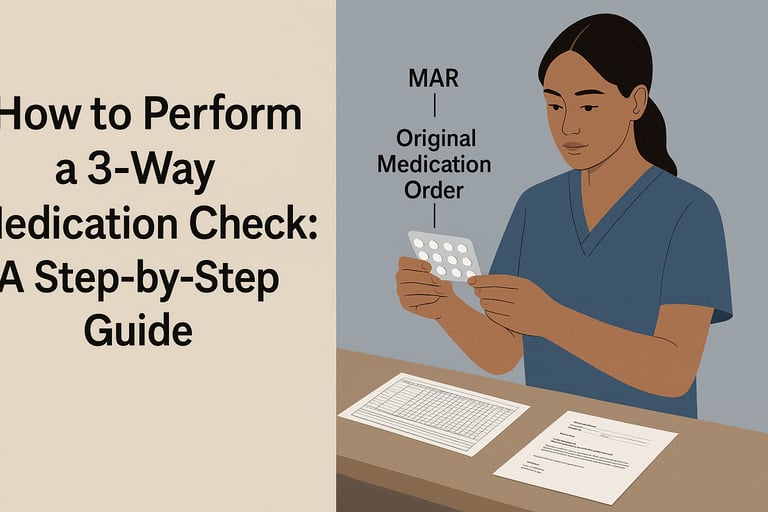
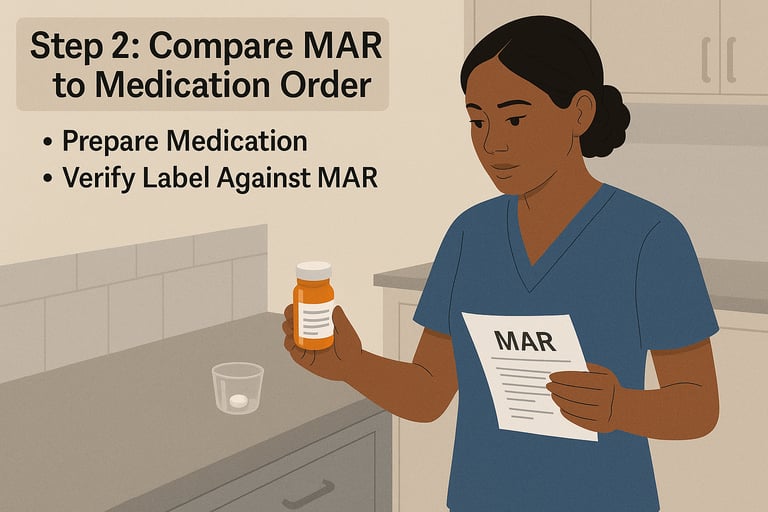
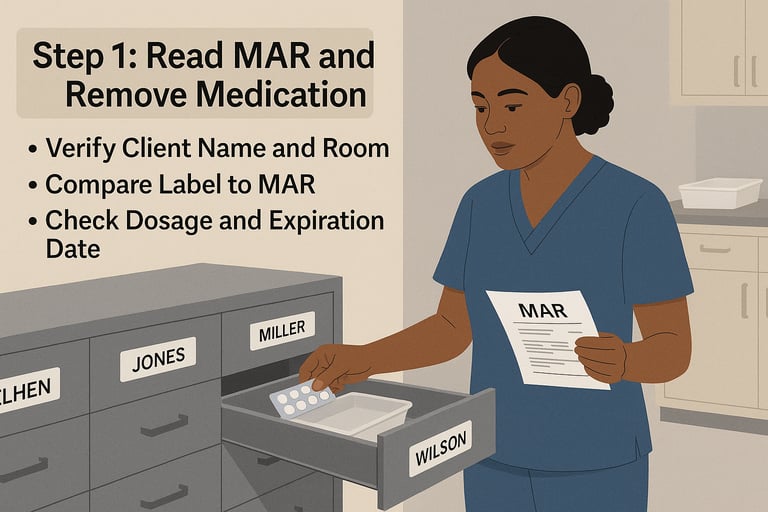
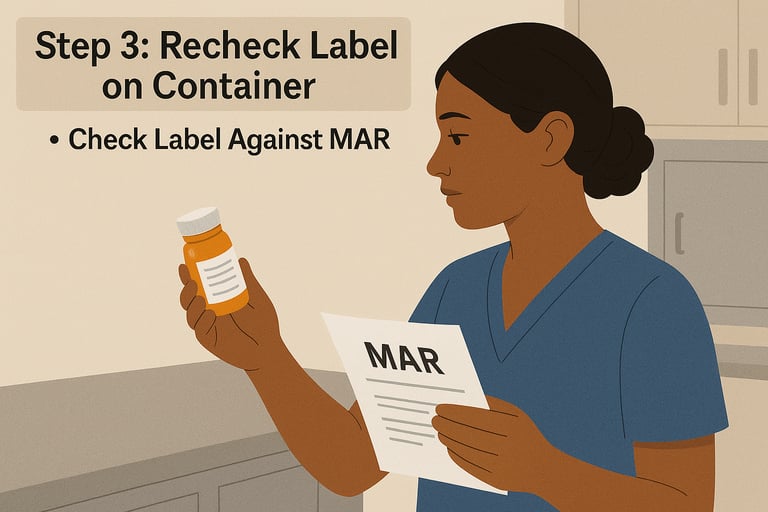
PERFORM A 3 WAY CHECK TO PREVENT ERRORS
🟦 SECTION 2: MODULE 4 VIDEO
Module 4 Video Lesson
This lesson reviews medication errors, documentation errors, and incident reporting basics.
🟦 SECTION 4: TYPES OF ERRORS
Section 1: Medication Errors
Examples include:
Wrong medication
Wrong dose
Wrong time
Wrong route
Medication given to the wrong person
Missed or omitted doses
Section 2: Documentation Errors
Examples include:
Pre-documenting
Missing initials or time
Illegible entries
Incorrect MAR entries
Failure to document refusals or omissions
🟦 SECTION 5: MODULE 4 PRACTICE ACTIVITY
Practice Scenario
Review a fictional medication error scenario and identify:
What type of error occurred
What actions should be taken
Who should be notified
🟦 SECTION 6: INCIDENT REPORTING BASICS
Incident Reporting
Incident reports are used to document unexpected events
They help improve safety and prevent future errors
Incident reports are not part of the medical record
Reports should be completed promptly and accurately
Stick to facts — avoid opinions or blame
🟦 SECTION 7: WHAT NOT TO DO
Important Reminders
Do not alter or falsify documentation
Do not erase or use correction fluid
Do not ignore or hide errors
Do not assign blame
🎓 Knowledge Check
Congratulations on completing this section! Please complete the following quiz to assess your understanding of the material. A score of 80% or higher is required to pass and continue to the next module. Best of luck!
🟦 SECTION 9: MODULE 4 COMPLETION
✅ Module 4 Complete
You’ve completed Module 4: Medication Errors & Incident Reporting.
You should now feel more confident recognizing errors, responding appropriately, and understanding the importance of accurate reporting.
🟦 SECTION 10: TRANSITION TO MODULE 5
What’s Next?
In Module 5, we’ll focus on Medication Terminology & Abbreviations, helping you better understand medication orders and MAR entries.
Contact
Questions? Reach out anytime.
Info@CareLearnPro.com
Info@CareLearnPro.com
© 2025. All rights reserved.